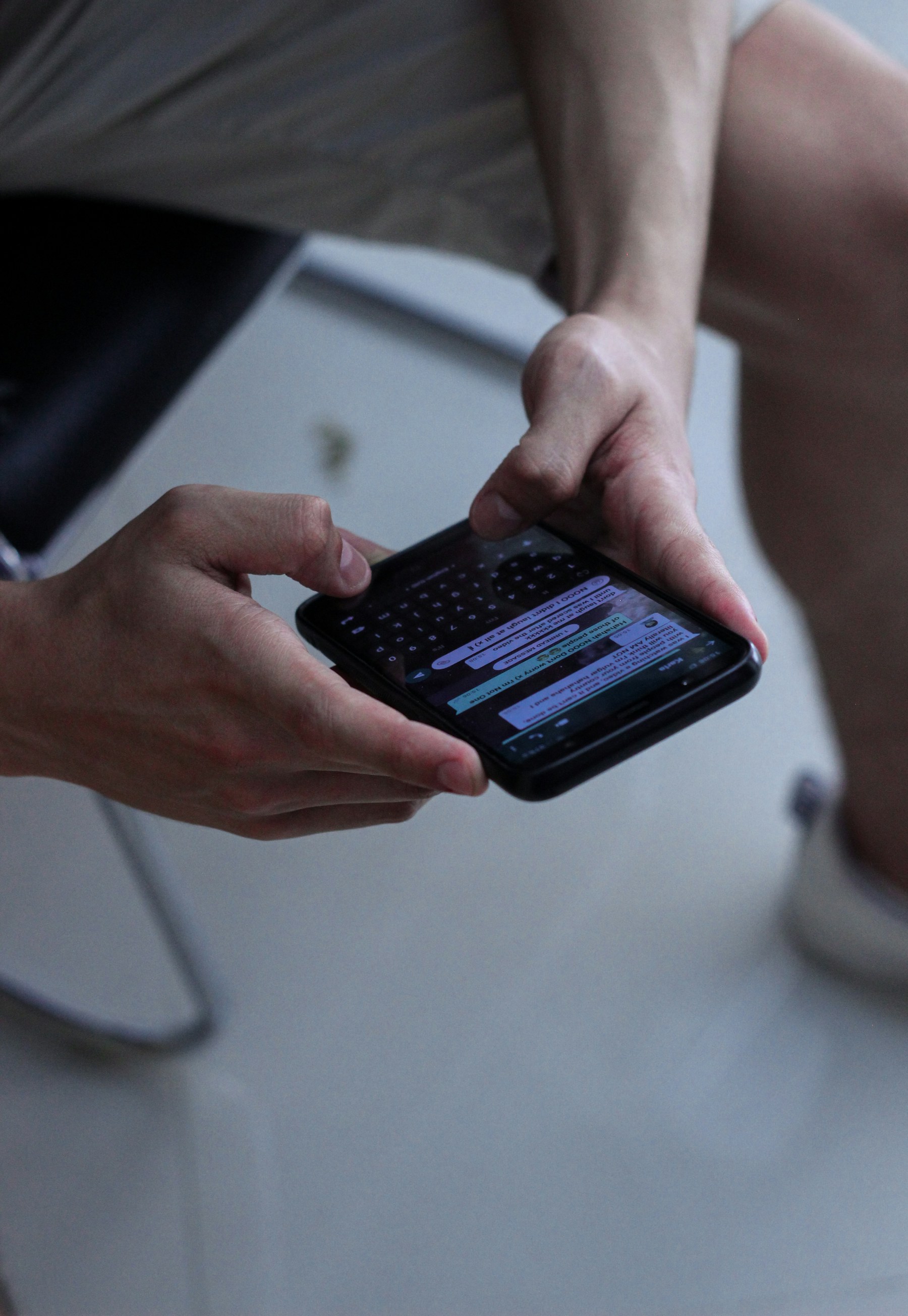
Digital consent means getting clear, voluntary and specific agreement before accessing, recording, saving or sharing another person’s digital life. It applies to phones, messages, photos, passwords, accounts, live location, health information, calendars and anything else technology makes easy to reach. A yes to one action is not automatic permission for another, and either person can change their mind.
What digital consent means in a relationship
The practical rule is simple: ask before you cross a digital boundary, explain what the access will do, and leave room for a genuine no. “Can I post this photo?” is different from “Can I keep it?” Sharing a location for tonight’s journey is different from enabling permanent tracking. Specific questions prevent a convenient feature from quietly becoming an open-ended expectation.
This is not about making ordinary relationships feel contractual. It is about keeping choice visible when devices can copy, store and distribute private information long after a moment has passed. Couples can be close, transparent and generous without treating every device, account or conversation as shared property.
A quick definition
- Clear: both people understand what is being requested.
- Specific: permission covers one action, audience and duration.
- Voluntary: saying no does not trigger punishment, guilt or suspicion.
- Reversible: either person can pause or withdraw access later.
- Renewed: a past yes does not settle every future situation.
For a practical companion to this idea, read set healthy boundaries while a connection is still developing.
Use the CLEAR check before sharing or accessing
A memorable way to make digital consent practical is the CLEAR check: Choice, Limits, Explanation, Access and Review. Choice asks whether both people can freely decide. Limits define exactly what is covered. Explanation makes the purpose understandable. Access identifies who or what can see the information. Review creates a time to revisit the decision.
Suppose a couple wants to share live locations during separate journeys home. A CLEAR agreement might be: “Would you like to share until we both arrive? Only the two of us will have access, and we will turn it off afterward.” That is easier to evaluate than “Couples should always share locations.” It solves a specific need without creating permanent surveillance.
The framework also works for small moments. Before forwarding a funny private message to friends, ask whether the sender would be comfortable with that audience. Before using a partner’s laptop, ask which profile or files are in scope. Friction is not the enemy here; a brief pause can protect context that cannot be restored once it is shared.
CLEAR in one line
- Choice: can each person say yes or no without consequences?
- Limits: what exactly is permitted—and what is not?
- Explanation: why is the access useful now?
- Access: who, which device or which service can see it?
- Review: when will the agreement end or be discussed again?
Closeness can include access, but access should never become the price of being trusted.
Phone privacy is compatible with trust
A relationship does not erase the privacy of conversations with friends, relatives or colleagues. A phone may contain other people’s disclosures, work information, financial records and personal notes that were never offered to a partner. Keeping a passcode private can protect those responsibilities; it is not proof of deception.
Some couples know each other’s device codes for emergencies or convenience. That can be consensual when the purpose is understood and neither person treats the code as permission to search. A useful agreement might allow answering a call while driving but exclude opening messages, photos or browser history. Access should be as narrow as the reason for it.
Secret checking changes the question from “What would help me feel reassured?” to “What can I discover without asking?” If uncertainty is growing, name the behavior or information causing it and make a direct request. Trust is better tested by whether a concern can be discussed and repaired than by whether one person can pass an inspection.
A respectful phone agreement can include
- which emergency situations justify device access;
- whether either person wants to share a passcode at all;
- which apps, messages and folders remain private;
- how to revoke saved biometrics or codes after the agreement changes.
Continue this topic with build digital trust without demanding constant proof.
Ask separately about taking, keeping and sharing photos
Photo consent has several stages. Someone may agree to a picture but not to posting it, tagging a location, sending it to a group chat or keeping it indefinitely. Ask before each new use, especially when a photo reveals a home, workplace, child, health detail, private event or intimate context. Silence after a camera appears is not a reliable substitute for agreement.
Social posting deserves a real preview. Show the image, caption, audience and location tag before publishing rather than asking a vague “Is this okay?” If a partner wants a different crop, delayed post or no post, the decision should not become a test of affection. Public visibility affects both people even when only one account publishes it.
Intimate images require especially clear consent. Permission to create or receive an image is never permission to forward, upload, threaten, trade or use it after a relationship ends. The eSafety Commissioner describes sharing or threatening to share an intimate image without consent as image-based abuse. Laws and reporting options vary by location, so anyone affected should use qualified local support rather than relying on general articles for legal advice.
Three questions before posting
- Are you comfortable with this exact image and caption?
- Who can see it, and does it reveal a place or routine?
- Would you like me to ask again if I reuse it later?
Screenshots change the audience
A private message is written for a particular recipient and context. A screenshot can detach it from both. Even when the goal is harmless—asking a friend for advice or sharing a sweet exchange—forwarding the image gives new people access to names, timestamps, profile photos and nearby messages. Ask first or paraphrase only what is necessary.
There are exceptions where preserving evidence may matter, including harassment, threats, fraud or coercion. In those situations, consider keeping the record private, storing it securely and seeking guidance from a qualified support service or relevant authority. Evidence preservation is different from public exposure, and posting can create additional privacy, safety or legal complications.
For ordinary disagreements, do not recruit an audience before the other person knows the conversation is leaving the relationship. If outside perspective would help, agree on what can be shared and with whom: “I would like to talk this through with my sister. Is it okay if I describe the issue without showing the messages?”
For another useful perspective, choose the right channel for a sensitive conversation.
Location sharing needs a purpose and an end point
Live location can coordinate travel, help people find one another or support a temporary safety plan. It can also reveal routines, appointments and private visits. Start with the purpose, choose the shortest useful duration and confirm who has access. A relationship label does not turn continuous tracking into a default requirement.
Location data should inform logistics, not demand an explanation for every pause or route. GPS can be delayed or imprecise, and an unexpected location can have many ordinary causes. If the feature repeatedly produces interrogation, anxiety or pressure, stop sharing and discuss whether it is helping the relationship at all.
Review old permissions. Family groups, shared-device accounts, photo metadata, transport apps and connected cars can expose location even after one visible setting is switched off. If changing access could create conflict or danger, use a safer device and seek specialist technology-safety support before making changes; the NNEDV Safety Net Project provides resources focused on privacy and technology misuse.
A time-limited request
- “Would sharing our locations until we get home make tonight easier? We can both turn it off when we arrive.”
- “I do not want continuous location sharing, but I can send a message when I leave and when I get there.”
Passwords and shared accounts need an exit plan
Sharing a streaming login is different from sharing email, banking or cloud-photo credentials. Before combining access, consider how sensitive the account is, whether it contains other people’s information and what happens if the relationship or household changes. Whenever a service supports separate profiles or delegated access, that is usually clearer than handing over a primary password.
Do not reuse a personal password to create a “couple” account. Use a unique password and multifactor authentication, then agree who controls recovery email, phone numbers and backup codes. Shared control should not leave one person able to lock the other out of essential files, money, transport, work or communication.
An exit plan is not pessimistic; it is basic maintenance. Keep an inventory of genuinely shared services, preserve individual recovery methods and review access when moving, separating or replacing a device. Remove old fingerprints, face unlock profiles, browser sessions and linked devices when permission ends.
You may also want to create sustainable digital routines across distance.
How to revisit consent without creating a loyalty test
Digital arrangements should change as circumstances change. A routine that once felt helpful may become unnecessary, intrusive or technically risky. Use neutral check-ins rather than waiting for a conflict: “We have had location sharing on for a month. Is it still useful to both of us?” The answer can change without invalidating the earlier choice.
Treat withdrawal as information, not betrayal. Ask what the person wants now, make the technical change promptly and discuss any feelings separately. “I feel worried about less contact” invites a conversation. “If you loved me, you would keep your location on” turns access into a condition of affection and makes a voluntary decision impossible.
RAINN describes consent as an ongoing conversation rather than a one-time yes. That principle is useful beyond sexual activity: agreement should remain clear, specific and free from pressure. A healthy digital agreement can survive being questioned because its purpose is mutual comfort, not proof of innocence.
A monthly privacy check-in
- Which information are we sharing now?
- Is each setting still useful to both of us?
- Has the audience or technology changed?
- Is there anything either person wants to stop, narrow or replace?
Recognize pressure, monitoring and digital control
A request becomes concerning when refusal leads to punishment, threats, repeated accusations or secret workarounds. Examples include demanding passwords as proof of love, installing tracking software without permission, impersonating a partner, reading private messages, controlling account recovery or threatening to publish intimate material. These are not ordinary transparency agreements because choice has been removed.
Do not confront or disable technology in a way that could increase danger if you believe a partner is monitoring you. A sudden change can alert the person controlling an account or device. Use a device they cannot access when possible, document what is happening safely and contact a specialist support service for a plan suited to your location and circumstances.
The National Network to End Domestic Violence emphasizes that technology can support connection and safety while also being misused for stalking, coercion and abuse. Responsibility belongs to the person misusing the technology. Nothing about sharing a password, photo or location earlier makes later control or non-consensual distribution acceptable.
Digital consent questions, answered
Is it normal for couples to share passwords? Some do and some do not. The useful question is whether the choice is voluntary, limited and safe. No one owes access to email, banking, messages or devices as evidence of commitment.
Can consent be implied because we have shared before? Do not assume it. Context changes: a photo approved for a private chat may not be approved for a public feed, and a location shared during travel may not be welcome every day. Ask about the new use.
What if my partner posts a photo I dislike? Ask for it to be removed and clarify the rule for future posts. If intimate material is shared without consent or used as a threat, preserve relevant evidence safely and seek platform reporting options and qualified local support.
Should couples have separate digital spaces? Privacy and secrecy are not the same. Individual messages, notes, accounts and friendships can coexist with honest communication. The goal is not maximum access; it is an arrangement in which both people understand what is shared and remain free to choose.
Make digital closeness deliberate
The healthiest digital agreements are specific enough to use and flexible enough to change. Ask before accessing, name the audience, set an end point and review the choice. Those habits turn consent from an abstract value into ordinary care around the tools a relationship uses every day.
Start with one practical conversation rather than a complete audit. Choose the area that creates the most uncertainty—photos, phone access, location or shared accounts—and run it through the CLEAR check. Closeness grows when both people can share generously without losing the right to privacy, context and a genuine change of mind.
Sources & further reading
Continue with trusted research
- Consent 101: Respect, Boundaries, and Building TrustRAINN
- Image-based abuseeSafety Commissioner
- Digital boundarieslove is respect
- Safety Net ProjectNational Network to End Domestic Violence
This article offers general educational context, not medical, legal or mental-health advice. See our Editorial Policy.